
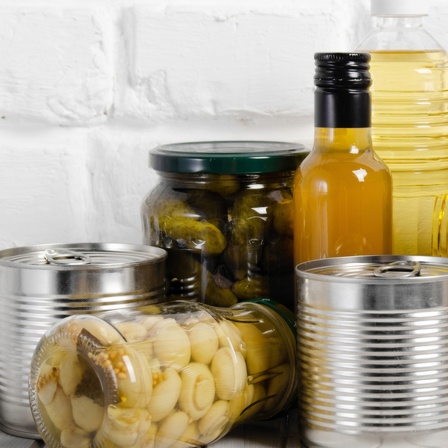
Dried fruit, smoked meat, eggs preserved in limewater, carrots stored in sand, sauerkraut in a clay pot: supplies had to last without refrigeration until the next harvest—otherwise, famine threatened. Today, food is preserved through canning and freezing, often to manage surplus.
Credits:
Author: Renate Ell
Editor: Thomas Morawetz
Director: Irene Schuck
Technical Director: Monika Gseanger
Speakers: Susanne Schroder, Carsten Fabian, Gudrun Skupin
Interviews with: Ruth Blasco, archaeologist, Institut Català de Paleoecologia Humana i Evolució Social (IPHES); Dr. Constanze Höpken, archaeologist, State Office for Monument Conservation of Saarland; Prof. Dr. Uwe Spiekermann, historian of consumption, Hanover.
Suggested links:
Constanze Höpken: “Food Preservation in Antiquity: Scientific Foundations and Historical-Archaeological Sources”
https://www.verlagdrkovac.de/open-access/7300/05._Hoepken._Konservierung_von_Lebensmitteln_in_der_Antike.pdf
Prehistoric deer bones may offer the earliest evidence of ancient food storage
https://www.smithsonianmag.com/smart-news/prehistoric-deer-bones-may-offer-earliest-evidence-ancient-food-storage-180973313/
Uwe Spiekermann: “Artificial Food. Nutrition in Germany from 1840 to the Present”
https://uwe-spiekermann.com/wp-content/uploads/2024/05/spiekermann_2018_kuenstliche-kost.pdf